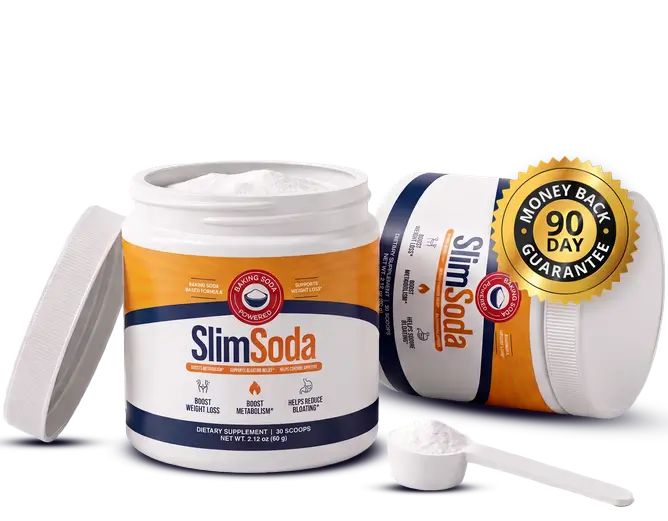
Baking Soda Weight Loss: What the Viral Trend Gets Right and Wrong
If you have searched for baking soda weight loss, you have probably seen short videos suggesting that a spoonful of baking soda in water can somehow melt fat, flatten your stomach, or reproduce the effects of popular weight-management products. The idea sounds simple, inexpensive, and easy to try. But the evidence behind the viral claim is much less straightforward.
This guide looks at what baking soda actually does in the body, what research does and does not show, why the baking soda weight loss trend became popular, and how products such as SlimSoda differ from simply mixing kitchen baking soda with water.

What is the baking soda weight loss trend?
The baking soda weight loss trend usually involves dissolving sodium bicarbonate in water and drinking it, often in the morning. Social posts sometimes frame the drink as a metabolism hack or a shortcut for appetite control. Those claims go beyond what has been established in human weight-loss research.
Baking soda is sodium bicarbonate. Medically, sodium bicarbonate is used as an antacid and in specific situations where a clinician wants to make the blood or urine less acidic. That is very different from saying that baking soda itself causes meaningful fat loss. The MedlinePlus sodium bicarbonate guide advises taking it only as directed and notes that it adds sodium to the body. For anyone following the baking soda weight loss discussion, that safety context matters.
So when people ask whether baking soda weight loss works, the most accurate answer is that there is not good evidence that ordinary baking soda, taken by itself, is a reliable weight-loss method.
Why can the idea sound believable?
Part of the appeal of baking soda weight loss comes from the fact that sodium bicarbonate changes acidity. That biochemical effect is real. What does not automatically follow is the conclusion that changing stomach acidity leads to meaningful or sustained fat loss.
Body weight is influenced by energy intake, appetite, food choices, activity, sleep, medications, hormones, health conditions, and many other factors. A temporary change in stomach pH should not be confused with a demonstrated reduction in body fat.
This distinction matters because a plausible mechanism is not the same as a proven outcome. A good way to evaluate any baking soda weight loss claim is to ask whether researchers tested the actual product, dose, population, and outcome being advertised.
Can drinking baking soda be risky?
Yes, especially when people assume that a household ingredient is harmless at any dose. Poison Control warns that excessive sodium bicarbonate can cause serious toxicity because of both its sodium content and its effect on the body's acid-base balance. That is an important limitation often missing from baking soda weight loss videos. Large amounts can also rapidly create carbon dioxide in the stomach.
MedlinePlus notes that people with high blood pressure, heart failure, kidney disease, or sodium-restricted diets should discuss sodium bicarbonate with a healthcare professional. It can also interact with medications. That is why copying a random baking soda weight loss recipe from social media is not a good substitute for following labeled directions or professional advice.
Why SlimSoda is not the same as kitchen baking soda
This is where the conversation around baking soda weight loss becomes more specific. SlimSoda is marketed as a formulated weight-management powder rather than plain sodium bicarbonate. According to the product materials, its formula combines baking soda with other compounds, including concentrated ginger extract and berberine, instead of presenting baking soda as the only active component.
That distinction does not prove that the finished product will produce a particular amount of weight loss, but it does mean that evaluating SlimSoda is different from evaluating a DIY glass of baking soda and water. The relevant questions become: What ingredients are present? At what doses? What evidence exists for those ingredients? What does the current label say? And are claims about the finished formula supported directly?
What does the evidence say about berberine?
Berberine is one reason the SlimSoda discussion should not be reduced to baking soda weight loss alone. A 2026 systematic review and meta-analysis of 23 randomized controlled trials found modest average reductions in body weight, BMI, and waist circumference with berberine compared with control groups. This makes the ingredient evidence more relevant than treating baking soda weight loss as a one-ingredient explanation. The average weight difference was under one kilogram, and the authors also called for better-quality trials.
That evidence is more meaningful than a viral anecdote, but it still does not establish that every supplement containing berberine will reproduce the same result. Formulation, dose, duration, population, adherence, and other ingredients matter.
How to evaluate a baking soda weight loss product
If a product enters your search because of the baking soda weight loss trend, look beyond the headline. Start with the current ingredient label and serving directions. Then check whether the evidence being cited studied the finished formula or only one ingredient in isolation.
It also helps to separate three questions: whether an ingredient has a biological effect, whether that effect has been shown to influence body weight in humans, and whether the specific commercial product has been tested. Those are not interchangeable.
Our guide on how to evaluate weight-management supplements explains how to review evidence, ingredients, and claims. Before ordering, also use our supplement buying checklist to review the seller, refund terms, shipping, and recurring-charge language.
So, does baking soda help you lose weight?
Plain baking soda should not be treated as a proven fat-loss treatment. The strongest takeaway from the baking soda weight loss trend is not that sodium bicarbonate magically burns fat, but that viral claims often compress a much more complicated subject into one ingredient and one dramatic promise.
If you are specifically researching SlimSoda, evaluate it as a multi-ingredient supplement rather than as a homemade baking soda weight loss drink. The product's marketing describes a broader formula, while the scientific evidence for individual ingredients varies in strength.
You can view the current SlimSoda offer and product details here. Check the current label, directions, price, guarantee, and purchase terms before deciding whether it fits your needs.
FAQ
Does baking soda burn belly fat?
There is no strong human evidence showing that ordinary baking soda by itself selectively burns belly fat or produces reliable long-term fat loss.
Is baking soda water safe to drink every day?
Daily use should not be assumed safe for everyone. Sodium bicarbonate increases sodium intake, can affect acid-base balance, and can interact with medications. People with kidney disease, heart failure, high blood pressure, or sodium restrictions should be particularly cautious.
Is SlimSoda just baking soda?
No. The product materials describe SlimSoda as a multi-ingredient powder containing baking soda alongside ingredients such as ginger extract and berberine.
Does berberine help with weight loss?
A 2026 meta-analysis of randomized trials found modest average reductions in weight, BMI, and waist circumference. That does not guarantee the same result from every berberine-containing supplement.
Where can I read the current SlimSoda offer?
You can review the current offer through the product link above. Read the ingredient label, usage directions, refund policy, shipping terms, and any recurring-payment language before purchasing.